University of Massachusetts Amherst / LSL Laboratory for Life Sciences
Amherst, Massachusetts
The 310,000 GSF Life Science Laboratories (LSL) was conceived as the centerpiece for revitalizing science and engineering on the UMass Amherst campus. Designed to enable groundbreaking discoveries, the facility provides robust and highly flexible labs dedicated to a truly transdisciplinary model of research. It is home to the Institute of Advanced Life Sciences IALS.
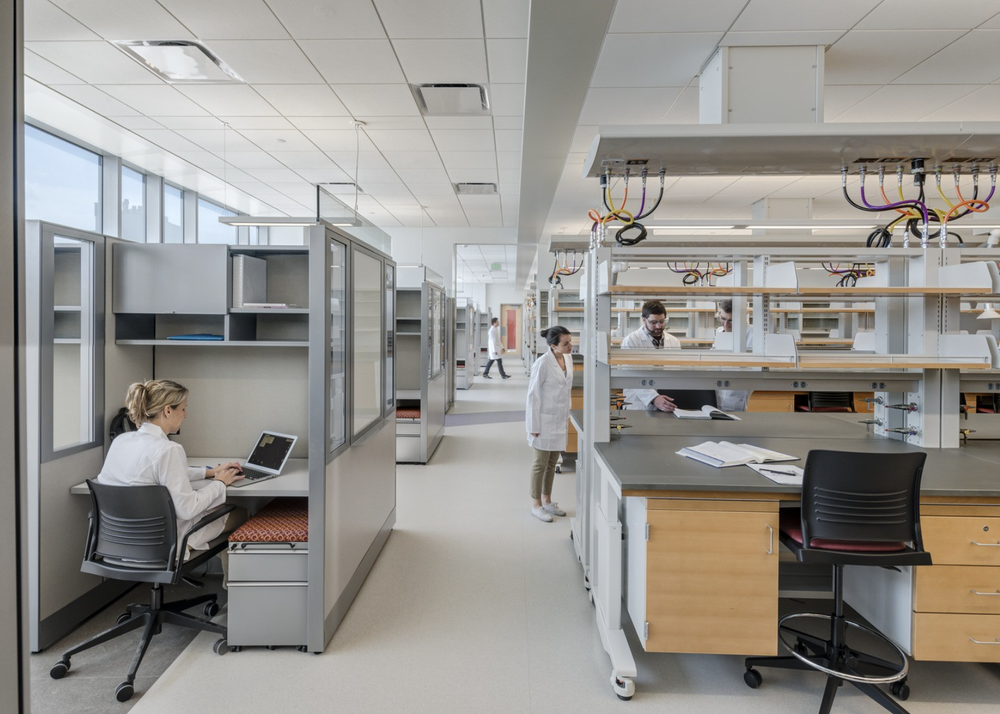
Breaking free from traditional departmental silos, the LSL is organized around research themes, seamlessly blending wet, damp, and dry laboratories for fields including Physics, Engineering, Biology, Environmental Science, and Chemistry. This unique approach encourages diverse teams to work together in the same spaces, fostering a broader culture of innovation. The LSL accommodates 64 faculty positions, 512 student researchers, and 37 staff, strategically supporting UMass Amherst’s objective to become a premier research institution. The inclusion of flexible shell space provided opportunities to recruit new faculty and form vital industry partnerships—a strategy already validated by securing funding for the shell space fit-out within a year of project completion.
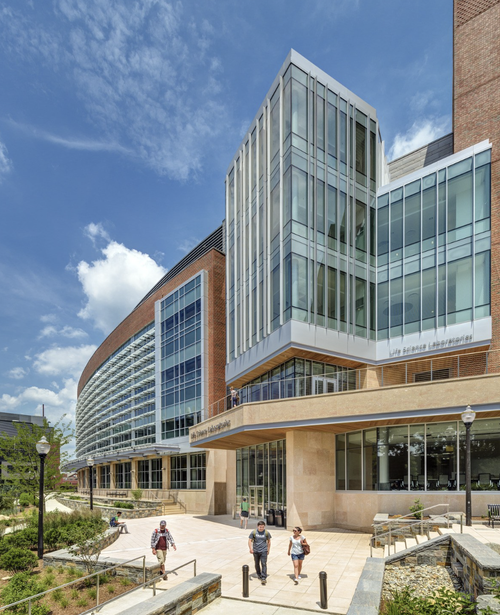
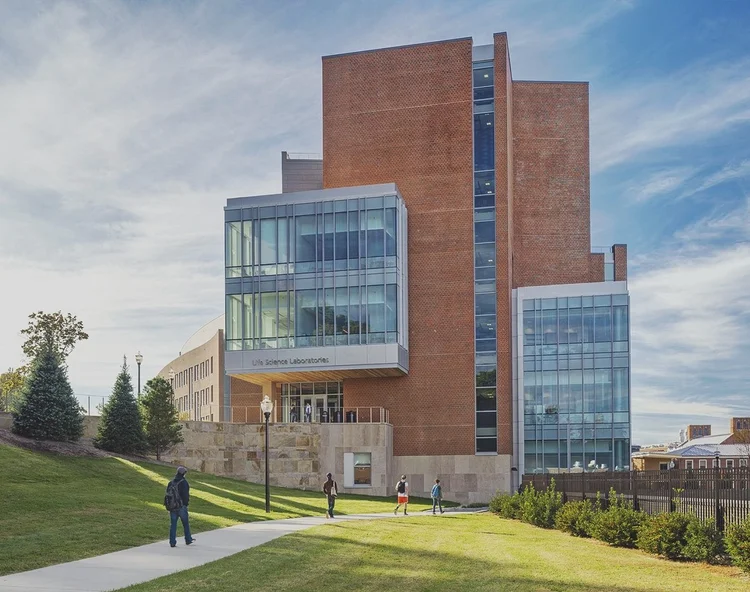
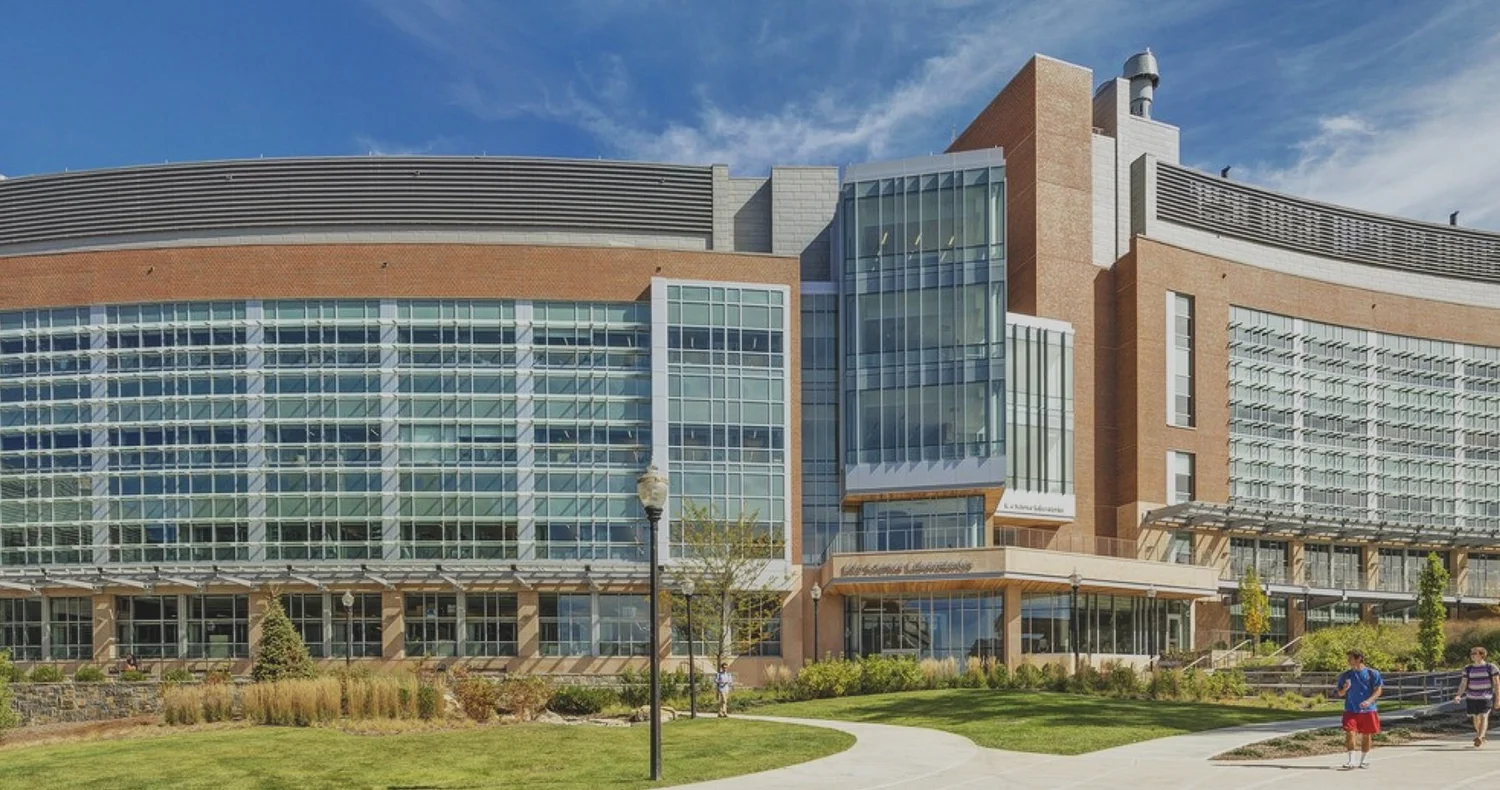
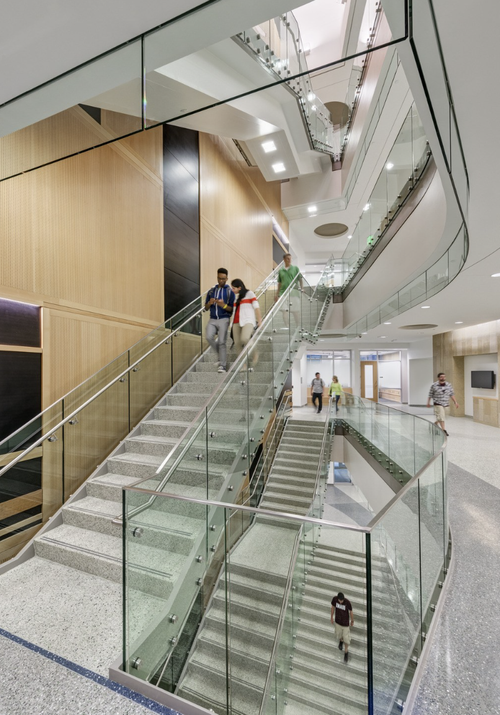
Dedicated to transparency, the LSL rejects the opaque research facilities of the past. Its glazed façades align with campus pathways, deliberately offering passersby views of science-in-action and promoting community engagement. The curved structure sits on the hillside, utilizing careful detailing and materials to break down its substantial size and blend naturally into the University surroundings while adding a new vibrancy to the landscape.
Sustainability was a critical design pillar. The project successfully tackled the enormous energy demands typical of lab facilities through a multi-strategy approach. Key elements include open lab design, low-flow fume hoods, energy recovery air handling units (AHUs), and innovative heat exchangers that harvest energy from water-cooled equipment. Combined with façade optimization and continuous air monitoring (Aircuity), the design achieved a massive 36.7% reduction in predicted site energy use (from 70,791 MBtu/yr to 44,748 MBtu/yr), yielding a remarkable Energy Use Intensity (EUI) of just 150 kBtu/sf/yr. The LSL’s flexible design anticipates future change, allowing the University to effectively manage and direct research growth, underscoring its role in moving UMass Amherst into the upper echelon of public research universities.
Gallery:



Project Name:
LSL Laboratory for Life Sciences
Client Name & Location:
University of Massachusetts Amherst / Amherst, Massachusetts
Area
310,000 SF
Occupancy Date:
2012
Features:
Multidisciplinary
Flex Lab Space
Classrooms
Cafe
Conference
Office
See articles about this project as well as more information on the following links:
- UMass Amherst – Life Science Laboratories | Mass.gov
- Life Science Laboratories (2013)
- UMass Amherst Life Science Labs – Built By DAS
- Life Science Laboratories (2013)
- University of Massachusetts at Amherst: New Laboratory Science Building – Kalin Associates
- UMass Amherst – Life Science Laboratories | Mass.gov