UMass Amherst / Physical Sciences Building
Amherst, Massachusetts
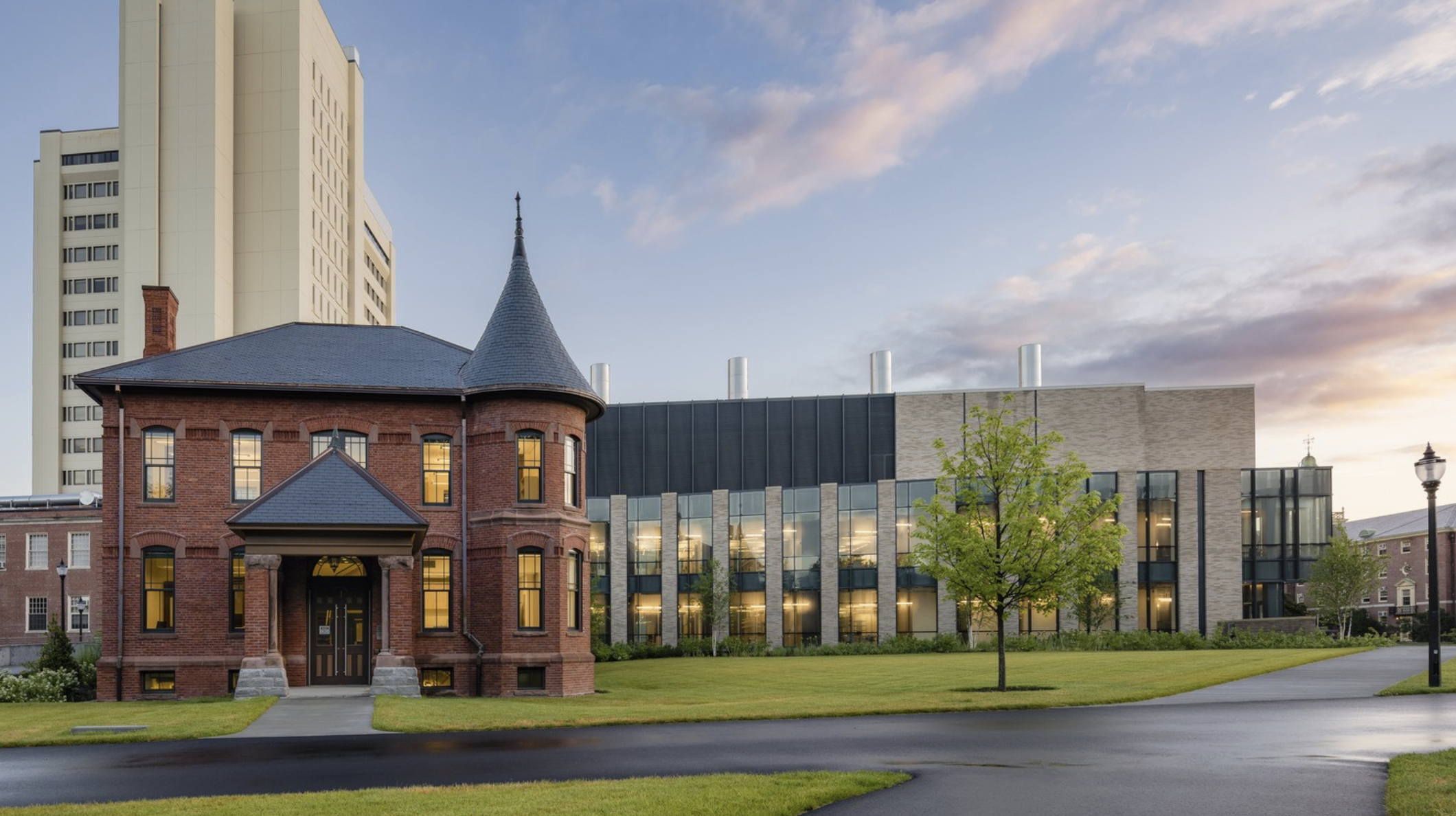
A historical landmark is recreated, and a new building is erected. PSB+WES are symbolic of both the roots and the future of the University – 19th century science growing into 21st century research.
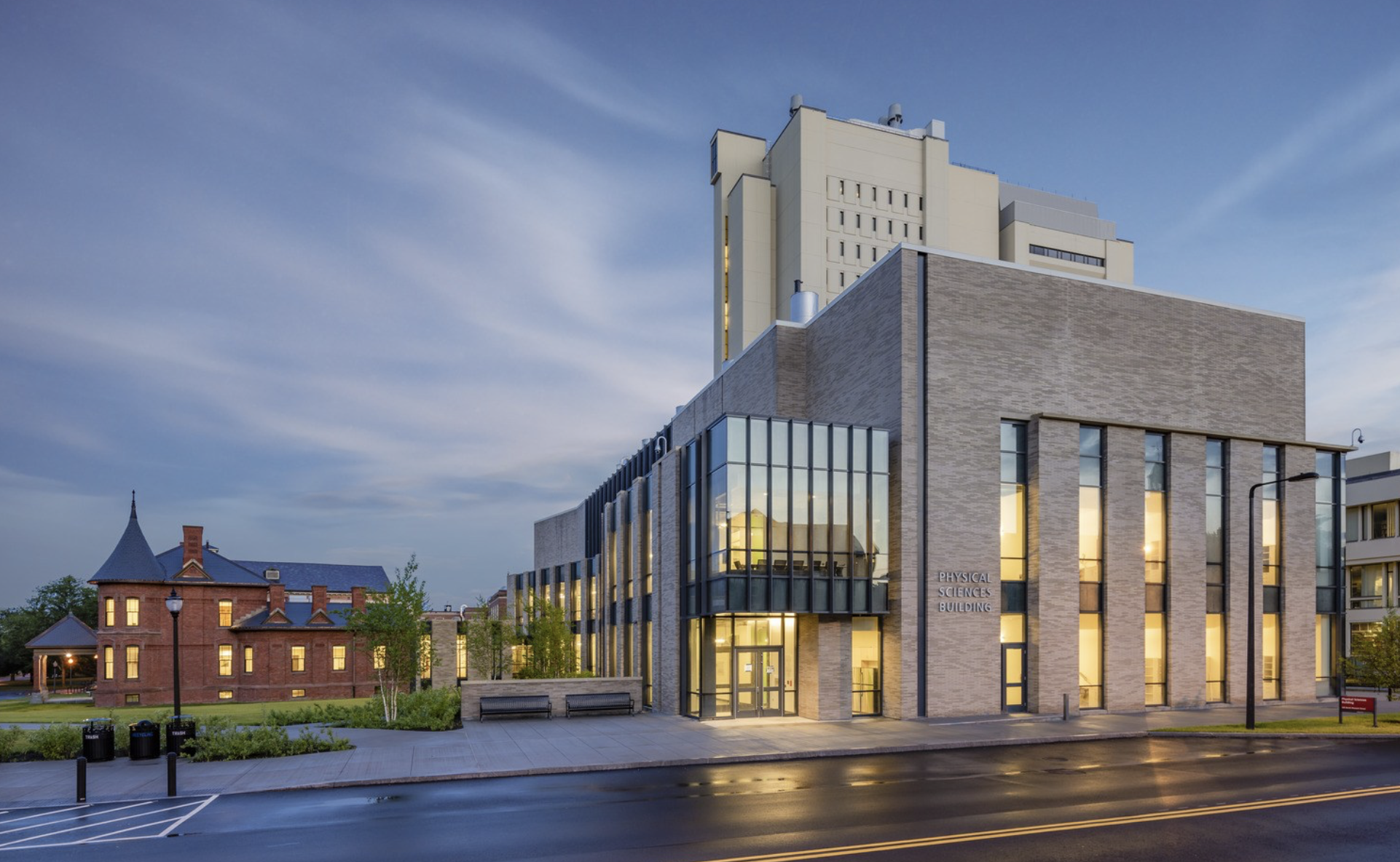
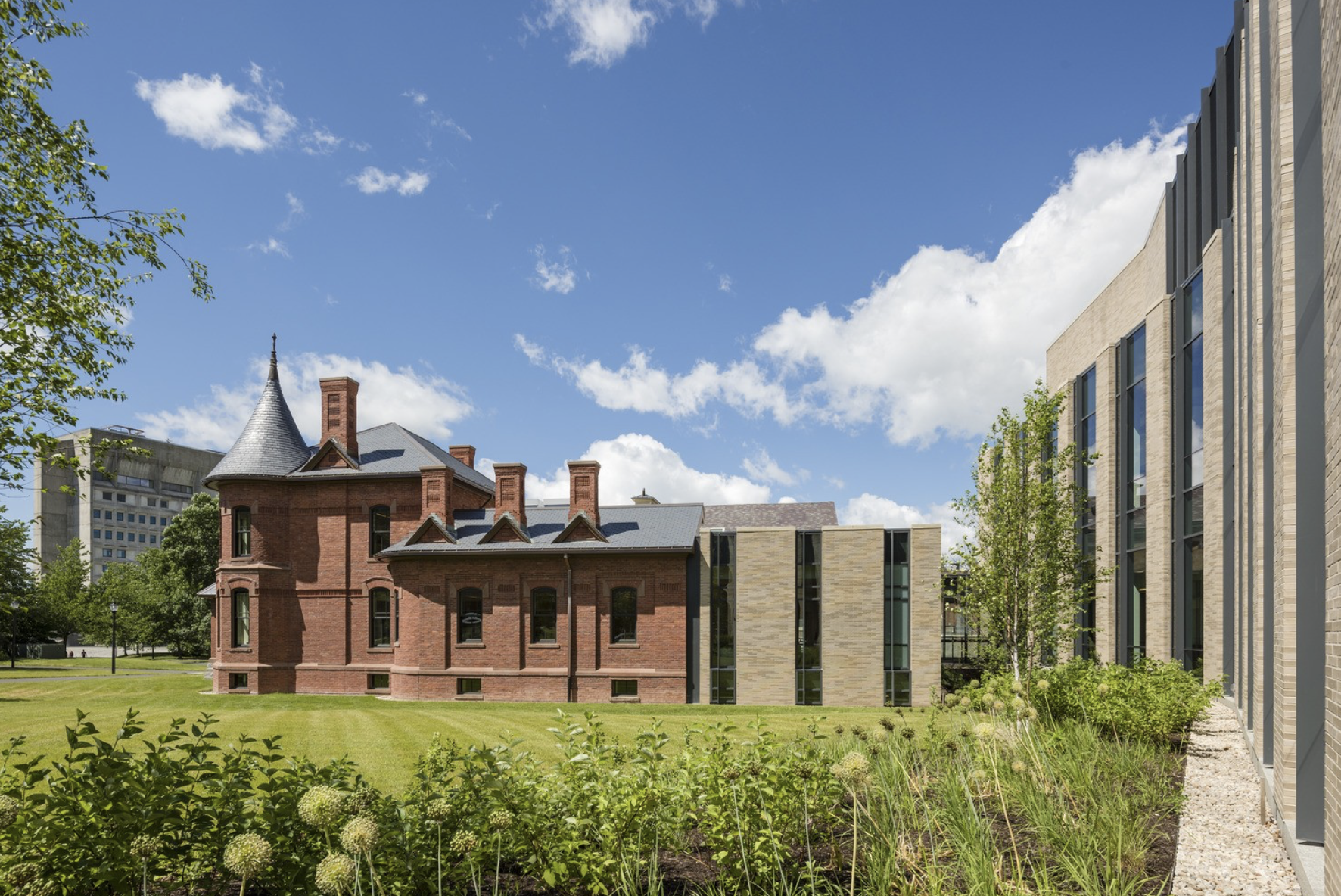
The Physical Sciences Building (PSB) is a combined chemistry / physics research laboratory. The 95,000 SF facility houses 20 faculty research groups, with 130 bench positions. The project includes the reconstruction of the West Experiment Station (WES), a 19th century research laboratory and one of the University’s oldest buildings. The original WES was structurally unsound. To save WES, the project dismantled it, salvaged its exterior, and re-created its 1890s appearance atop a fireproof steel skeleton. The new WES houses physics theory space.
PSB+WES embody a high degree of pedagogical forethought, sustainability, resilience, universal design, and respect for place and past. The project is LEED® Gold certified, with 66 points.
Physical Sciences
PSB is a pivotal part of the University’s Comprehensive Science and Engineering Master Plan. It houses scientific discovery in organic chemistry, materials science, and condensed matter physics. PSB houses specialized laboratories, including high-bay physics and synthetic chemistry research labs, that could not be accommodated by renovating existing facilities. It dramatically improves research safety, sustainability, visibility, and accessibility. PSB moves the sciences from the older buildings.
Science on Display
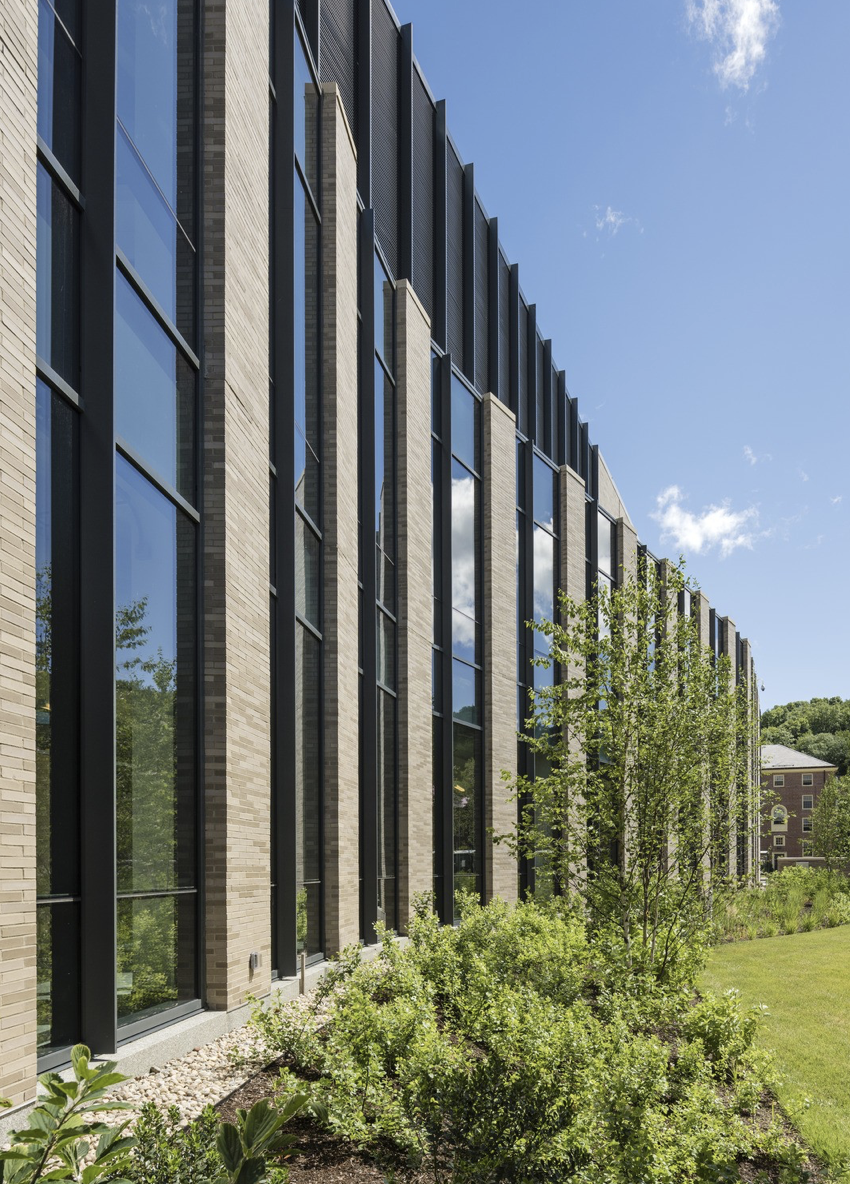
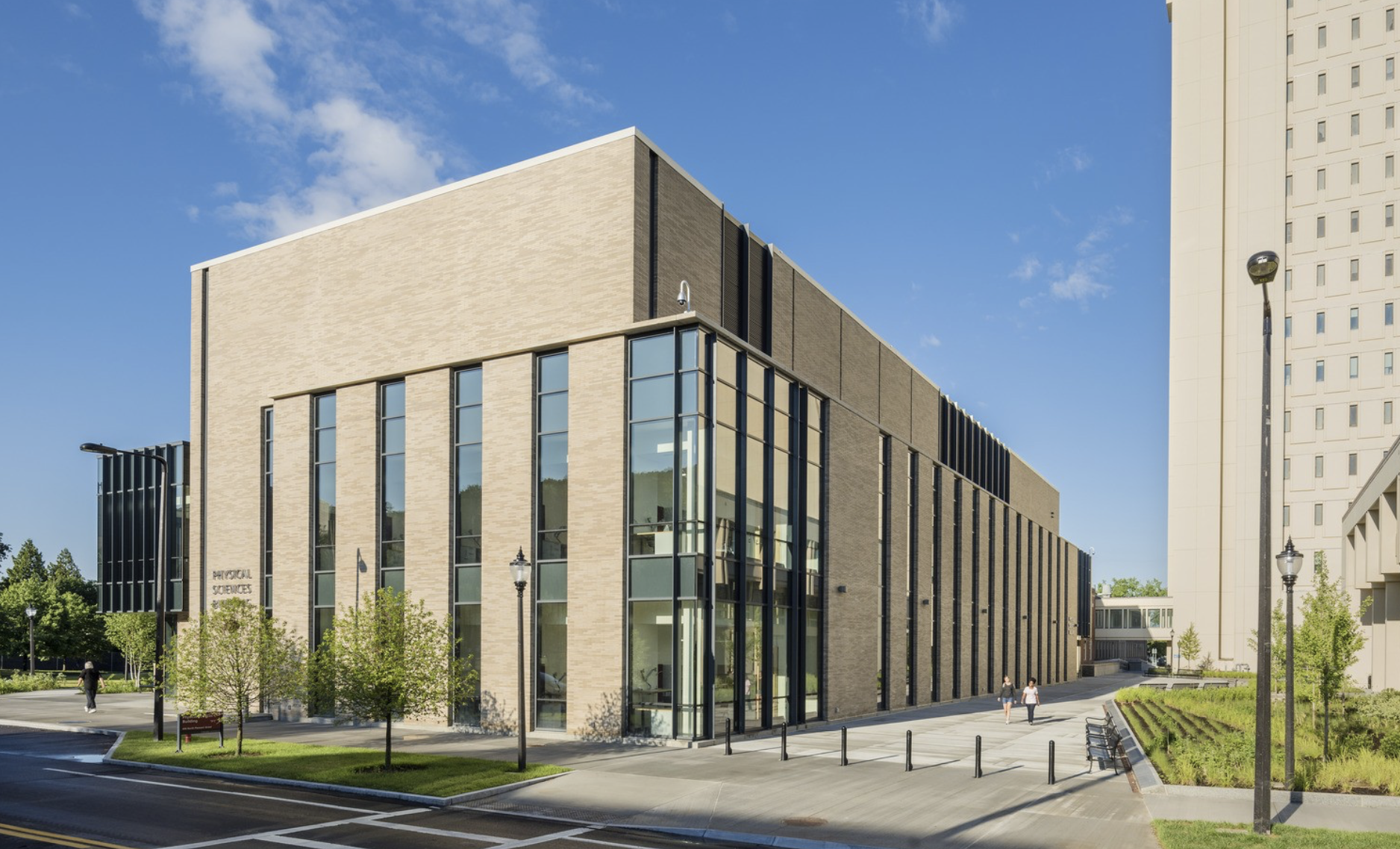
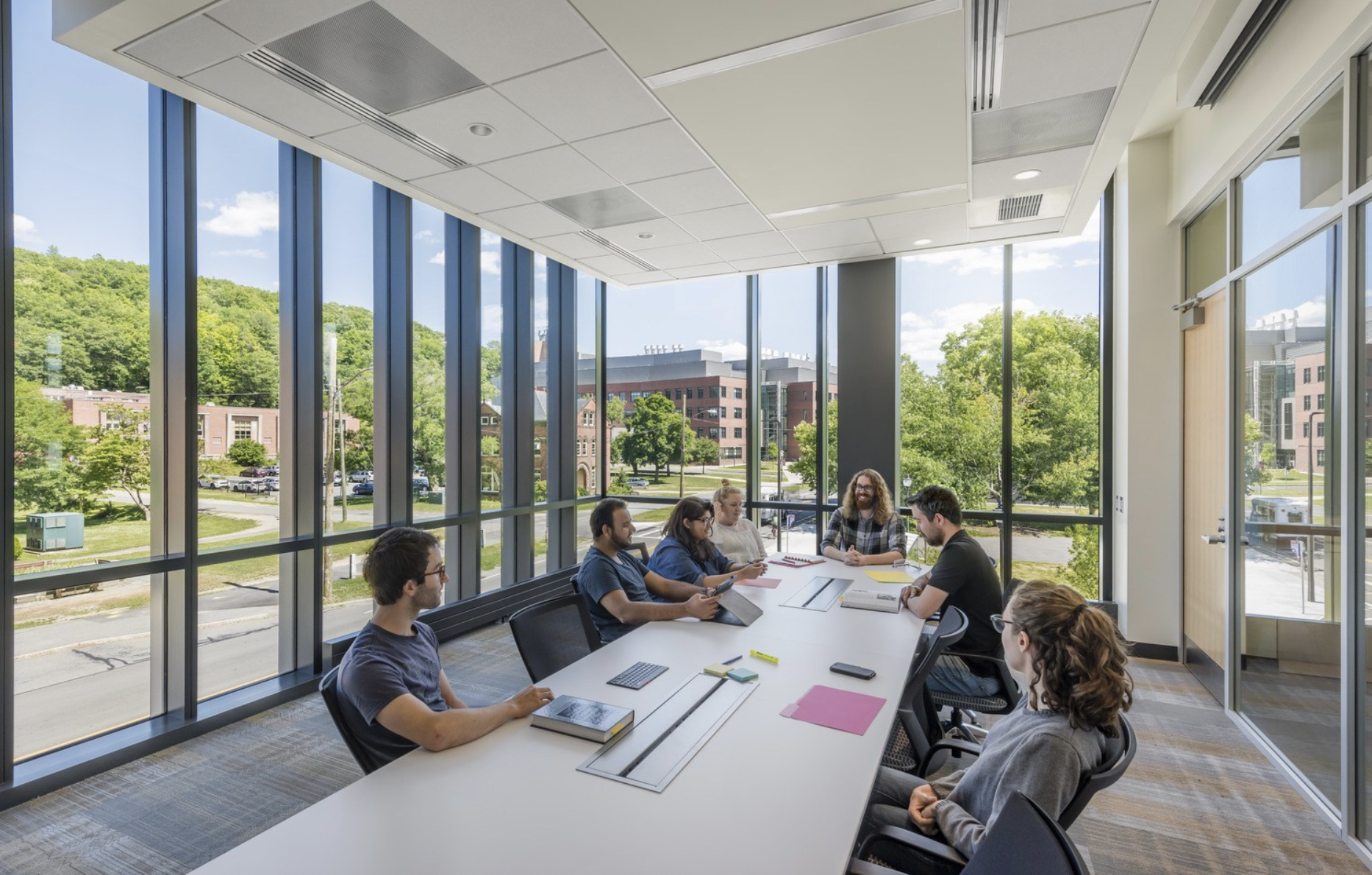
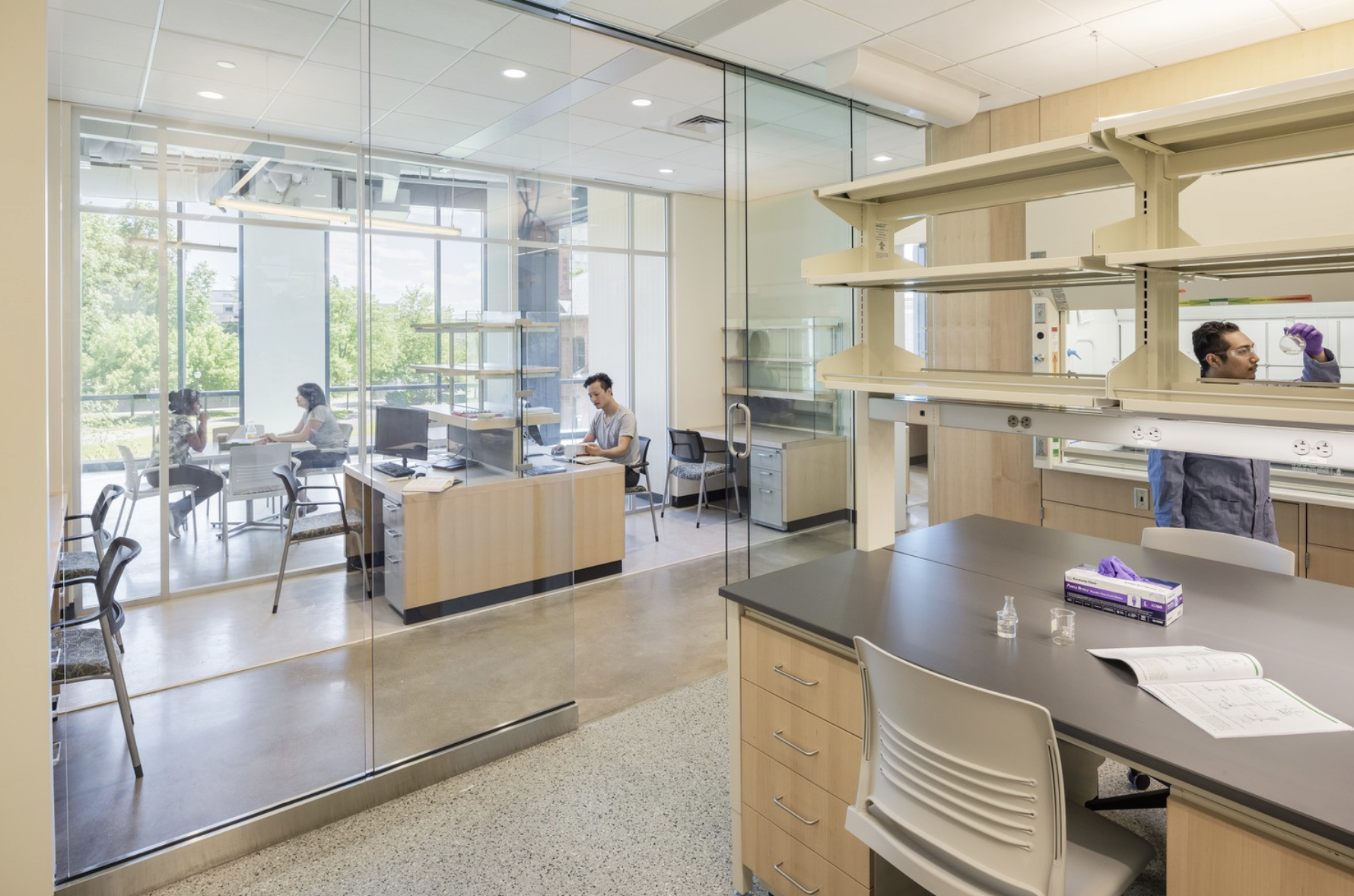
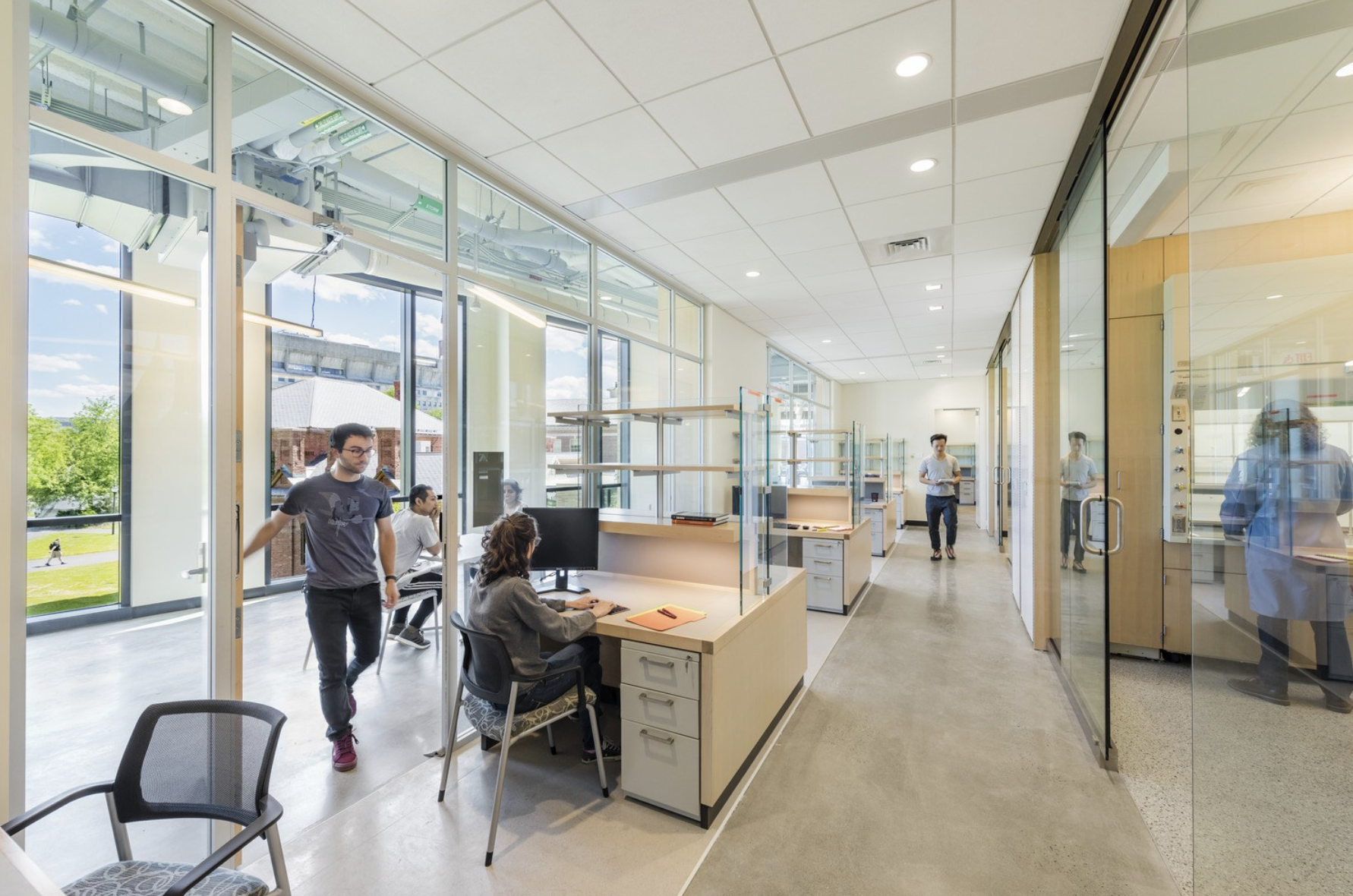
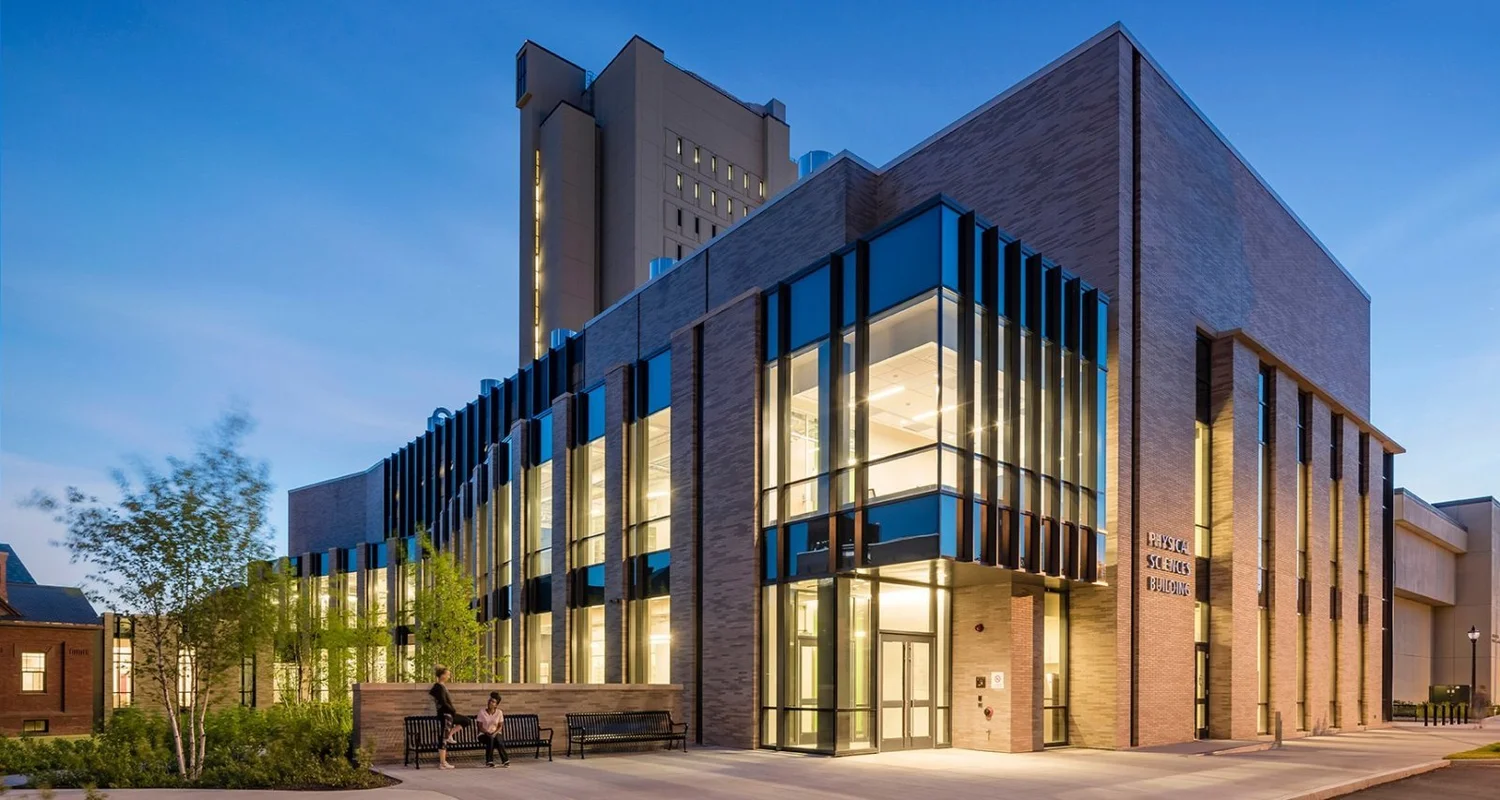
The PSB sits on a historical campus walk in the center of campus. Laboratories designated to move into PSB were formerly in the basement of physics and at top levels of the chemistry high-rise. They were hidden and physically difficult to access, hindering student exposure to research. In contrast, PSB’s design emphasizes transparency. Its labs have large windows onto the campus, allowing passersby to see the research within. A major corridor along the south of all floors allows students to see into labs. Writeable glass walls and other collaboration features are embedded throughout PSB.
Open Lab/Closed Lab
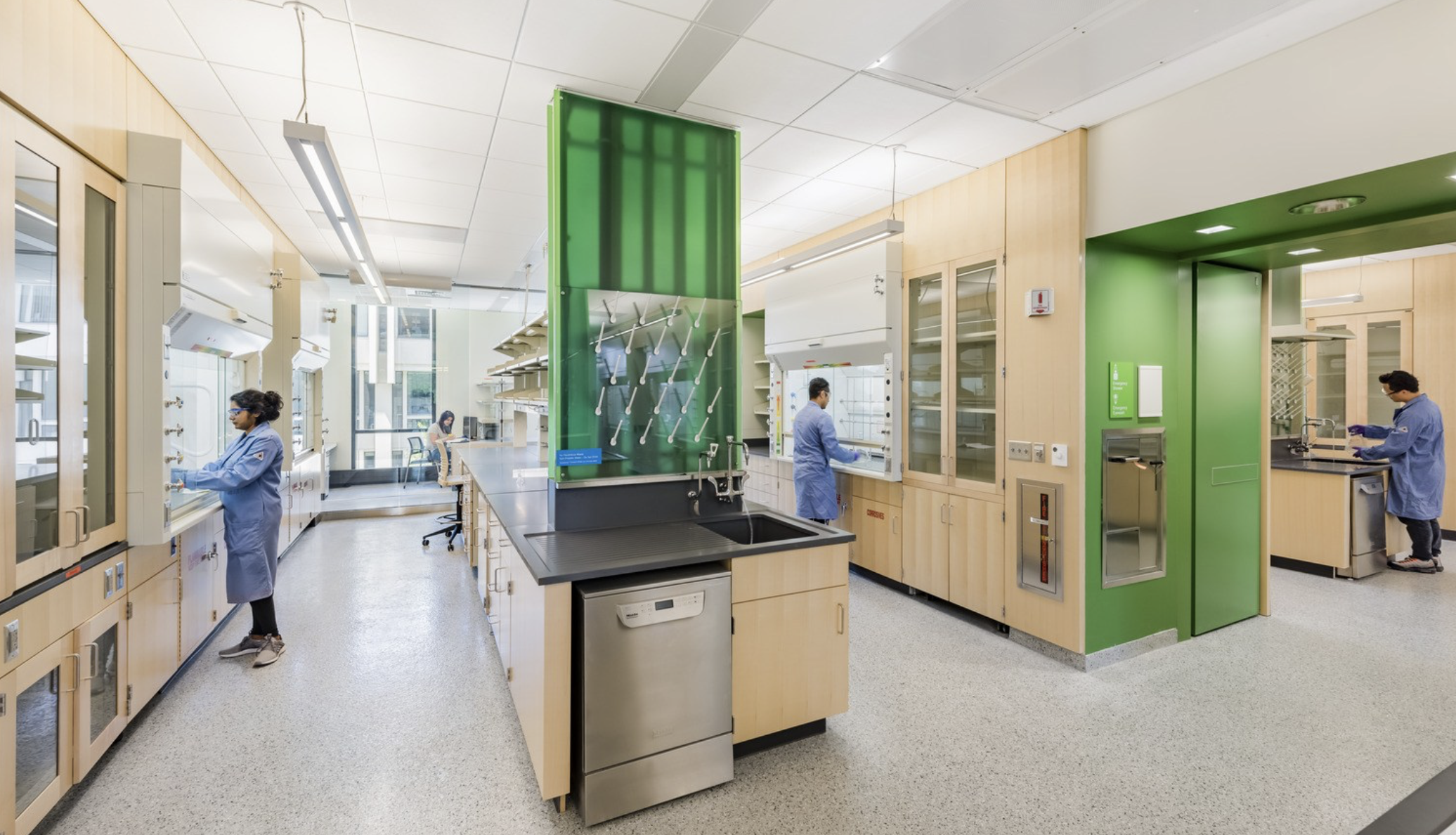
Laboratories have conflicting design objectives. On one hand, labs want to be open and accessible, with glass walls, natural light, and views. On the other, labs have quantities of dangerous chemicals, suggesting a cellular design of closed rooms surrounded by fire walls. PSB’s design cleverly weaves these needs together, with glass walls in the long direction, and fire walls in the short. Fire walls are carefully hidden behind wood casework or colored bright green. This leaves an overall impression of openness and light that belies its inherent fire safety.
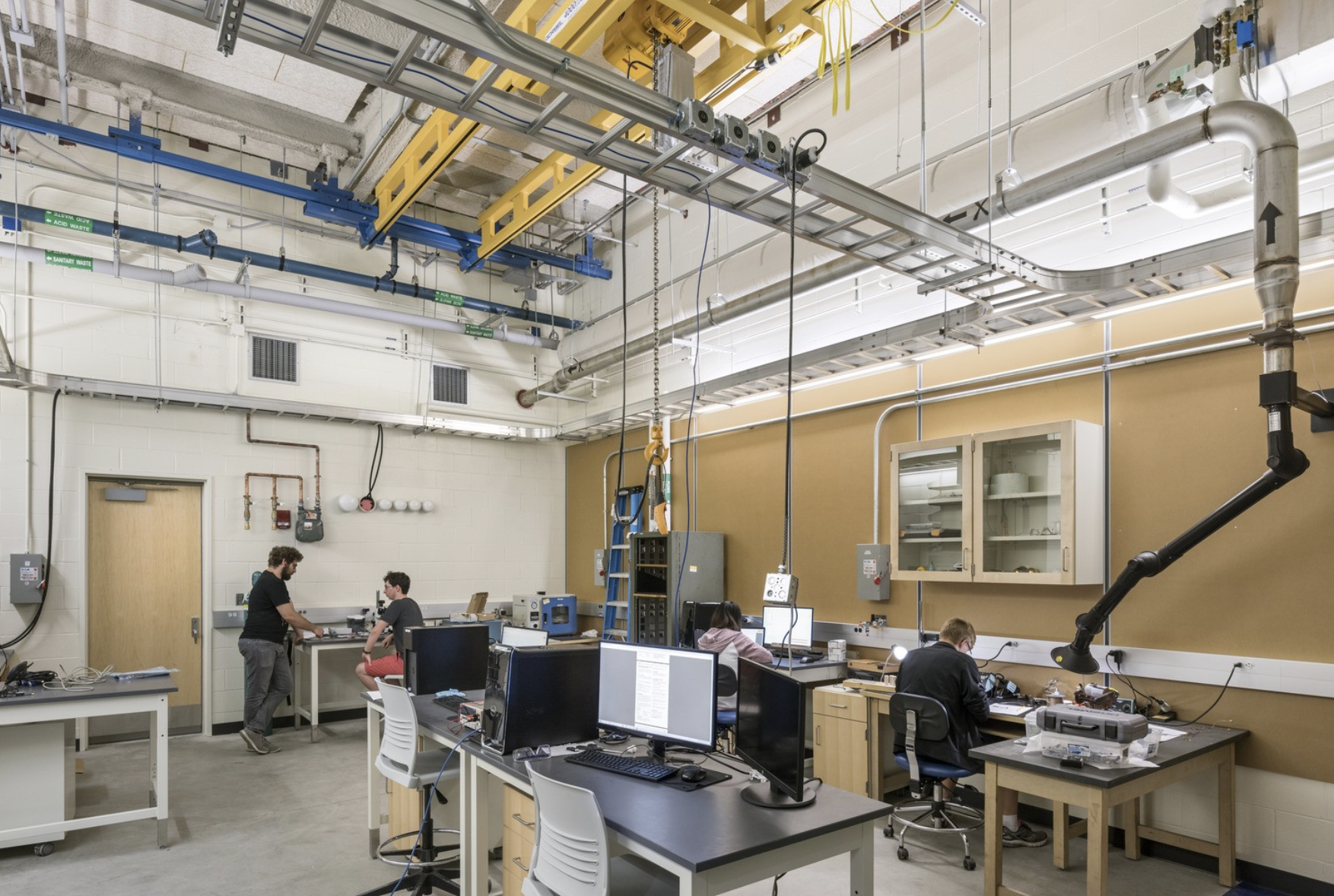
Physics research labs require low noise, vibration, and electromagnetic interference, as well as precise control of light, temperature, and humidity. Locating Physics in the basement insulates the labs from the noisy campus setting, allowing students to do research without compromising performance. It also submerges a third of the building in a “super basement”, dramatically reducing the building’s scale on the site. The pedestrian friendly massing, relationship with neighboring buildings, and creation of a new plaza are all tools that invite students to be curious about the research taking place.
Sustainable Design
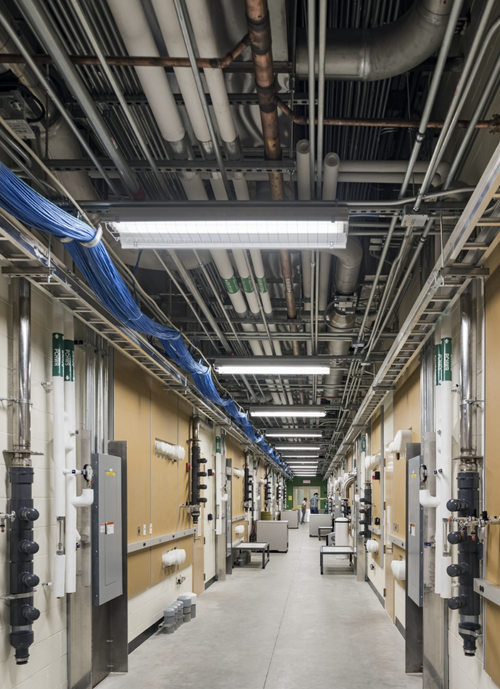
PSB embodies a high degree of pedagogical forethought, sustainability, resilience, universal design, and respect for place and past. Strategic lab planning and building massing decisions were made to reduce energy demand and optimize the occupant experience. An open “ballroom” lab design, vacancy controls, and an active energy awareness/user education program contribute to energy savings. Mechanical energy efficiency measures include VAV fumehoods, “cascade” air design, VRF heat pumps in some office areas, and heat pipe energy recovery units for laboratory air. Predicted site energy is 239kBTU/sf/yr, which is 30 percent less than code, and 66 percent less than the AIA 2030 regional average.
PSB is certified LEED® v3 Gold, with 66 points. The project demonstrates high achievement in all categories, including 10 points for Optimize Energy Performance, and 6 points for Water Efficiency. The design employs numerous innovative strategies, including Exemplary Performance for Transit Access and landscape Open Space. The project also achieves two strategies for regional priority credit, including Brownfield Redevelopment and Heat Island Reduction.
Gallery:

Project Name:
Physical Sciences Building
Client Name & Location:
University of Massachusetts Amherst / Amherst,
Massachusetts
Area
95,000 SF
Occupancy Date:
2021
Features:
Chemistry and High Performance Physics
Sustainable Design
See articles about this project as well as more information on the following links:
- University of Massachusetts, Amherst – Physical Sciences Building – HGA
- Physical Sciences Building (2018) : Planning, Design & Construction : UMass Amherst
- Whiting-Turner – UMass Amherst Physical Sciences Building
- UMass Amherst – Physical Sciences Building | Mass.gov
- Physical Sciences Building (2018)
- Recently Awarded Project: UMass Amherst Physical Science Building